
Where the Locals Eat in Xi'an
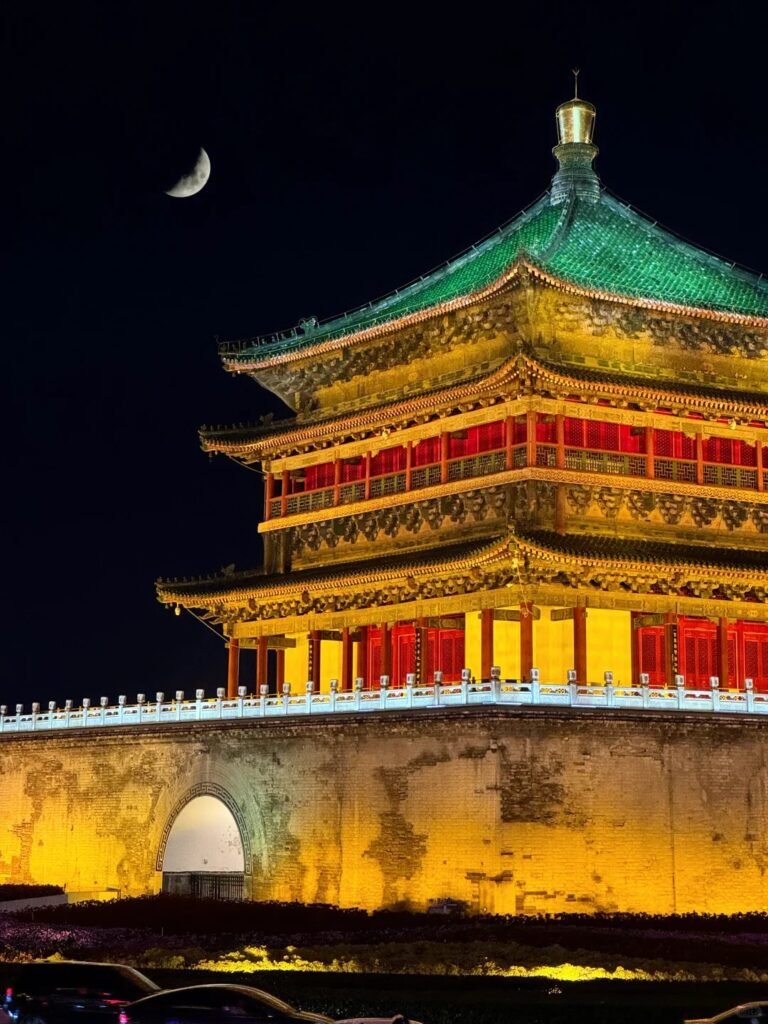
Xi’an is famous for its ancient history — but it’s just as famous for carbs. This is a city you don’t leave without three extra pounds. My first time here was for work, and after the meetings wrapped up, I met up with a former coworker I hadn’t seen in years. He’s a serious foodie, so I figured — great, a local to show me where the real food is. What I didn’t expect was that he’d take me straight to the Muslim Quarter. In my head, that place was tourist-trap territory — packed, overpriced, and a coin-flip on whether the food’s any good. He must have clocked the hesitation on my face, because on the walk over he laughed and explained: what locals actually avoid is just Beiyuanmen, the main strip facing the Bell Tower — the loud, crowded one everyone photographs. The Muslim Quarter itself (locals just call it Huifang) is a whole sprawling neighborhood — Sajinqiao, Dapiyuan, Xiyangshi, Miaohou Street, Xiaoxuexi Lane. Locals don’t just go there. They go there often, hunting through the back alleys for the good stuff.

We started at Sajinqiao, the street with the most local energy — a subway stop away, packed with food stalls, and everything cheap. First stop: Fatty’s Steamed Rice Cake (胖子甑糕), because apparently this place sells out by mid-morning. Some people show up at 6am just to get some. That’s the kind of reputation that makes you wonder how good something actually is. I took a bite the second it hit my hand — soft, sticky, layered with red dates and sweet bean paste, sweet but not cloying. My taste buds woke right up.
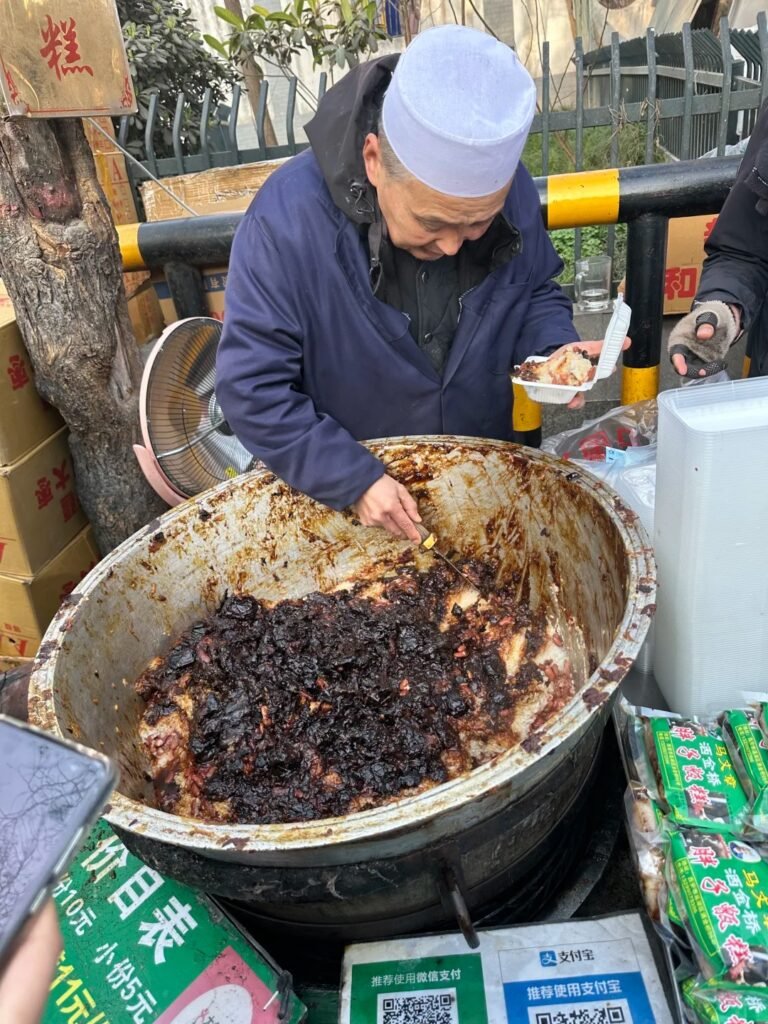
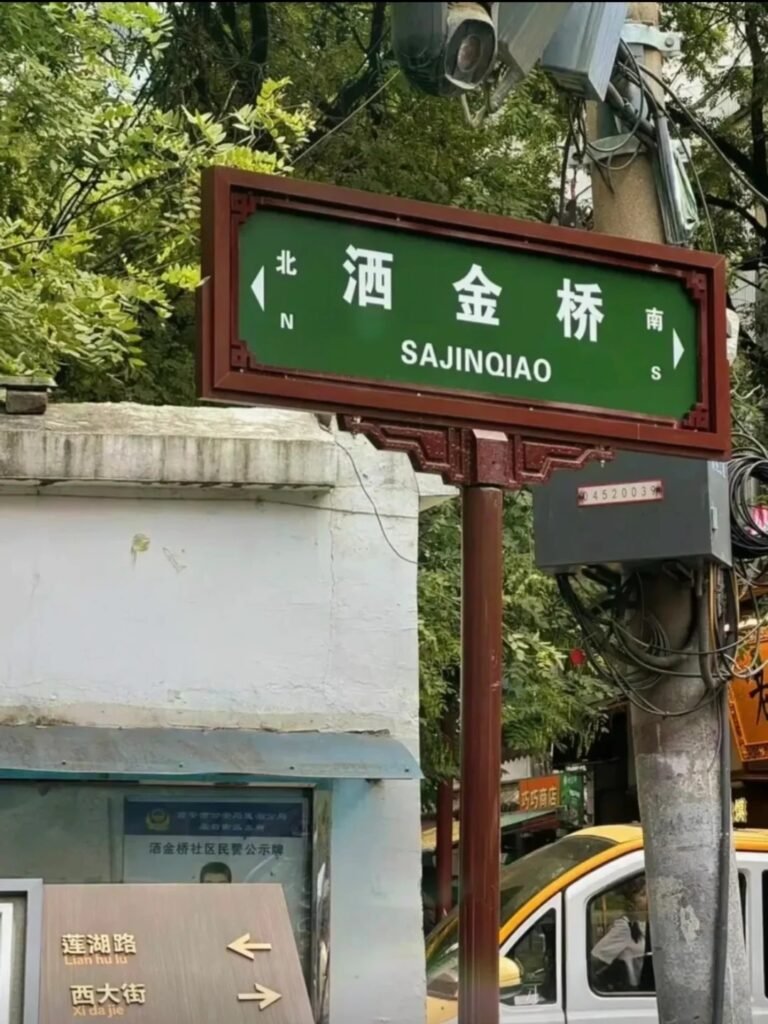
We didn’t stop moving after that — just kept walking down the alley while he pointed out shops, rattling off names like he’d grown up eating at every single one of them. A few steps later, we hit the most famous yangrou paomo (羊肉泡馍) place on the street.
This is the dish famous for the saying: “ten minutes to eat, an hour to break the bread.” You order at the counter, and they hand you a bowl with two flatbreads — your job is to tear them into pieces the size of soybeans, evenly, because that’s what lets the broth soak in properly. I spent a solid ten minutes on this, tearing away until my fingertips actually felt warm. Then you hand your ticket to the kitchen counter, tell them how you want it, and wait with your number. When the bowl came back, the broth was rich, the lamb tender and falling apart, cilantro on top, a clove of pickled garlic on the side to cut the richness. One bowl and I was completely full.


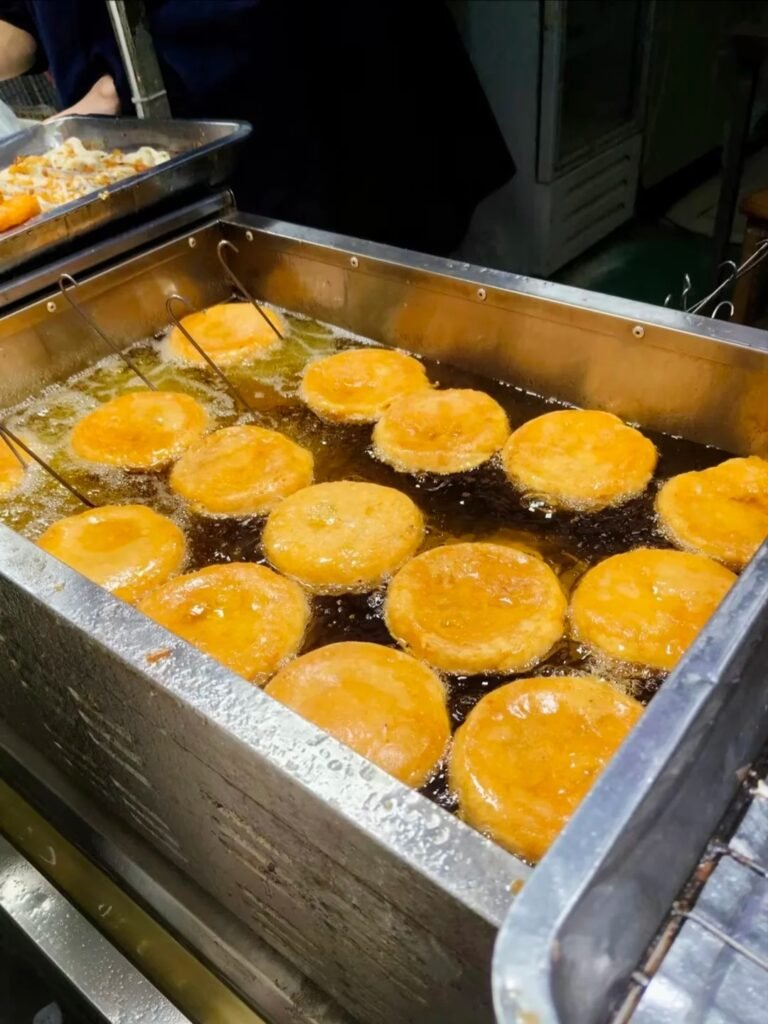
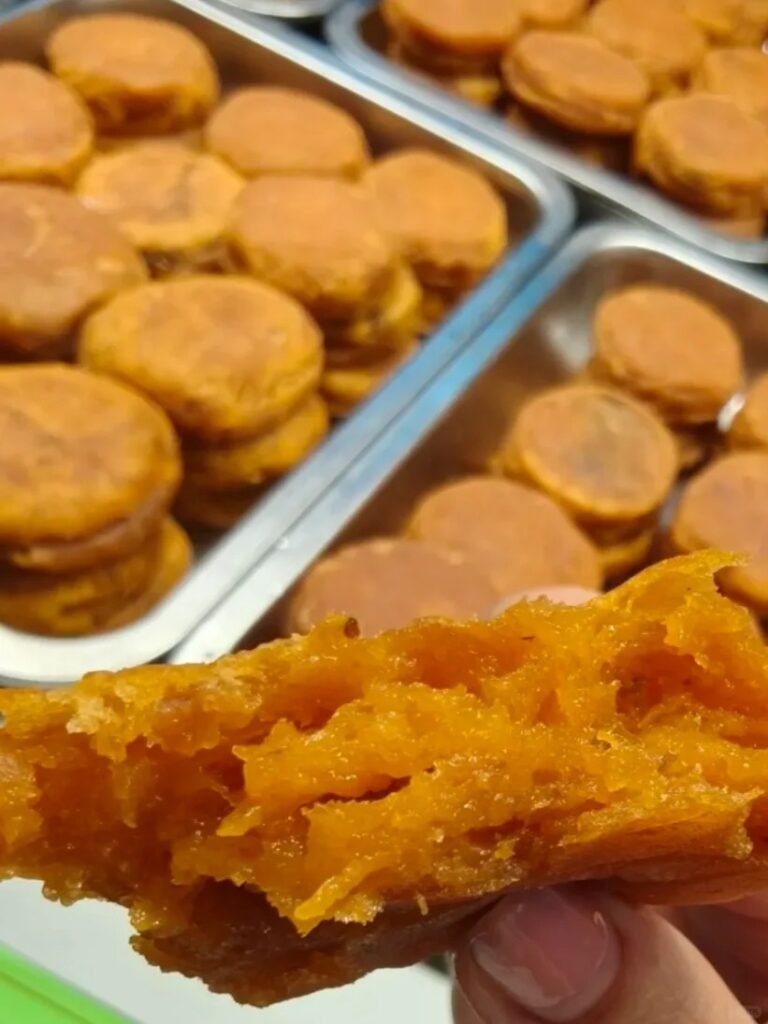
We closed things out with something sweet — persimmon cakes (柿子饼). Fried fresh to order, best eaten while it’s still hot enough to burn your tongue. Crispy outside, slightly chewy, and inside it’s this soft, doughy filling laced with persimmon — sweet, but not sugar-bomb sweet. One catch: persimmon cakes only show up in fall and winter, roughly November through January, because they need the season’s soft persimmons. No luck if you’re visiting in summer.
Turns out following a local into the Muslim Quarter really does get you the real stuff. My only regret was that my stomach gave out before my appetite did — rou jia mo, grilled skewers, shuipen yangrou — I’m literally salivating just typing this out.
Should I just book a flight back and eat my way through everything I missed? Ha.
More story

Join us
Get the occasional email from TripExpect — things worth knowing before or during your trip.
BEIJING-HUTONG
MUTIANYU GREAT WALL
HONGKONG
SHAOLIN TEMPLE
XI'AN

QINGDAO
SUZHOU
HOME
ABOUT
DESTINATION
TRAVEL GUIDE

Get the occasional email from TripExpect — things worth knowing before or during your trip.
© 2026 TripExpectJouney All Rights Reserved
