

Hanging Temple
Everything You Need to Know Before You Visit
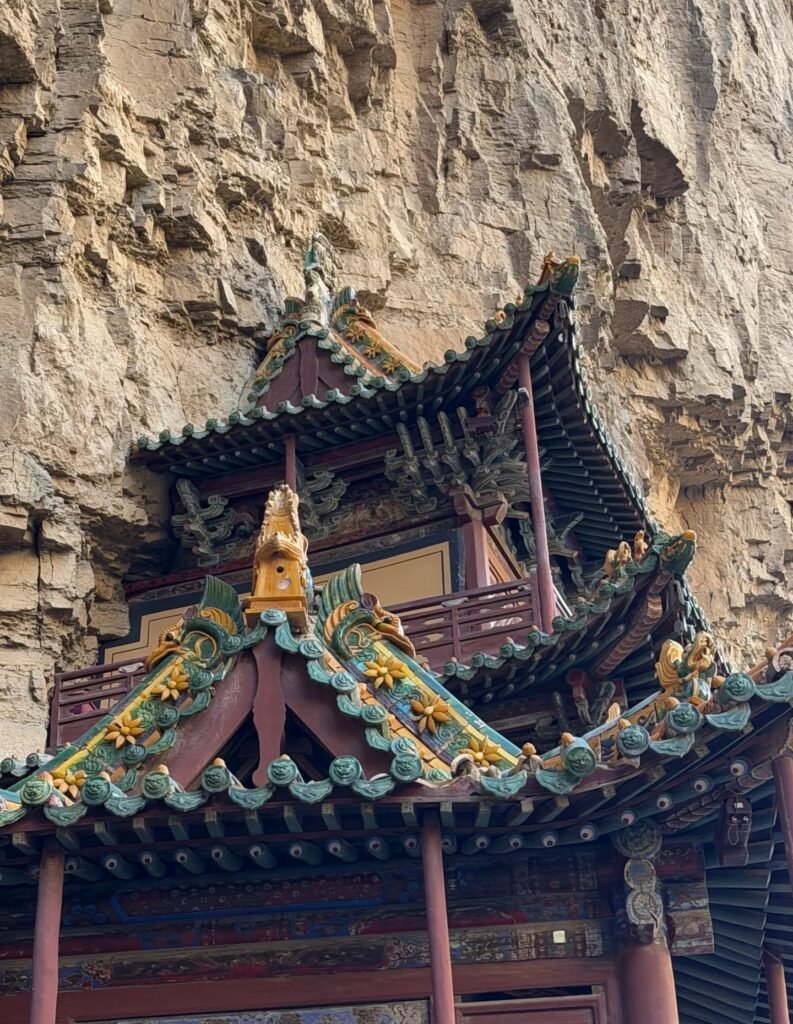
Picture a wooden temple glued to the side of a cliff, 60 meters above a canyon floor, held up by beams that are basically toothpicks compared to the mountain behind them. No nails. No concrete. Just 1,500-year-old carpentry that somehow still holds.
That’s the Hanging Temple — Xuankong Si — in Hunyuan County, Shanxi. It’s a two-hour bullet train from Beijing, and it’s one of those places where photos genuinely undersell it. You have to stand on the walkway yourself, feel it creak a little under your feet, and look straight down at the drop to actually get it.
So what makes it special
Built during the Northern Wei dynasty, the temple is wedged into the cliff face of Mount Heng, facing the Jinlong Gorge. What’s wild isn’t just that it’s built into a cliff — it’s how. Twenty-seven beams are driven horizontally into the rock, three-quarters of their length buried in the mountain, with just the tip sticking out to carry the entire structure’s weight. The vertical posts you see holding everything up? Mostly decorative. They barely bear any load at all. It’s an optical illusion built by people who understood physics better than we usually give them credit for.
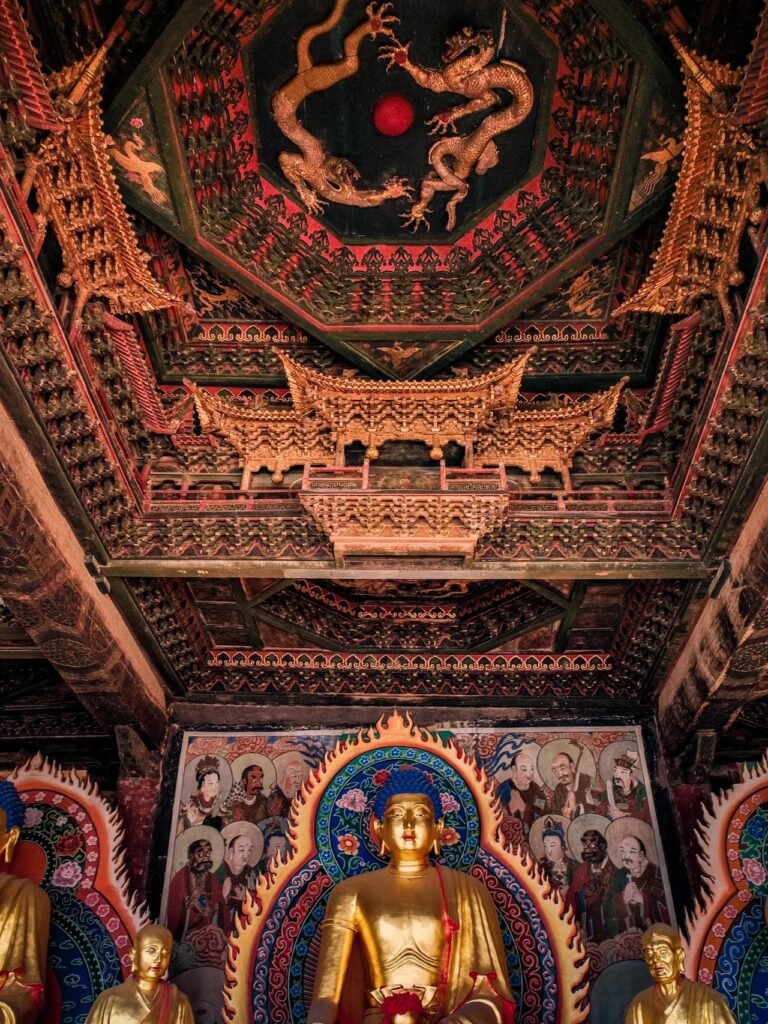
It’s also the only temple left in China where Buddhism, Taoism, and Confucianism share the same roof — literally. In one room barely 144 square meters, you’ll find statues of Buddha, Laozi, and Confucius sitting side by side. That kind of religious mixing is rare anywhere in the country, and it tells you something about how practical this region has always been about faith.
Keep an eye out for the two characters carved into the rock reading “spectacular” — supposedly written by the Tang poet Li Bai, who was apparently so overwhelmed by the place that he added an extra stroke to the character, as if “spectacular” wasn’t quite spectacular enough.

About ticket
Tickets here work on two levels, and this trips people up constantly:
- A basic entry ticket lets you view the temple from a distance only.
- A separate “ascend” ticket is what actually gets you onto the cliffside walkway — this is the real experience, and it’s limited to a set number of visitors per day for safety and preservation reasons.
The online ticketing system relies entirely on a Chinese-language WeChat Mini Program. Ticket sales open at a fixed time, and the most popular time slots often sell out within minutes. If you don’t read Chinese, the booking process can be challenging. For most international travelers, it’s often easier to buy tickets in person at the visitor center.
Try to arrive as early as possible—ideally before the attraction opens—as climbing permits or entry tickets frequently sell out within the first hour after opening.
If you prefer to book in advance, make sure you have the required WeChat Mini Program installed and set up before your trip.
If your main concern is the language barrier, a translation app with real-time camera translation can make the entire process much easier. In our Translation Apps for China guide, we’ve rounded up several apps worth downloading before your trip to help you navigate ticketing and other everyday situations with confidence.

Recommended Translation Apps for Foreign Visitors in China
Payment: set it up before you leave
Almost everything here runs on WeChat Pay or Alipay — cash and foreign cards are a lot less reliable, especially at smaller ticket counters or food stalls. The good news is that both apps now support linking an international card, but you’ll want to get that set up and tested before you arrive, not while you’re standing at the counter. We’ve written a full step-by-step on how to get WeChat Pay or Alipay working with a foreign card in [our payment setup guide] — walk through it before your trip and you won’t have to think about it again once you’re here.
When to go
Spring and autumn are the sweet spot — mild temperatures and clearer skies for photos. Summer brings more visitors and the occasional thunderstorm, which can affect the walkway. Winter is quieter and starkly beautiful, but the cliffside gets seriously cold and windy, so layer up if you’re visiting between November and March. Whatever the season, mornings tend to have the softest light for photos, and afternoons often mean shooting into the sun.

A quick reality check before you go
The walkway is narrow — about 30 centimeters in places — and some sections have railings that only reach knee height. It’s not dangerous in the sense that the structure is unsafe (it’s been standing for 1,500 years, after all), but it is genuinely unsettling if heights aren’t your thing. Wear proper closed, grippy shoes. This isn’t the place for sandals or slick soles.
If you’re prone to vertigo or just don’t love exposed heights, it’s worth being honest with yourself beforehand — the basic entry ticket still lets you see and photograph the temple from the viewing platform across the gorge, which is a completely valid way to experience it without setting foot on the walkway.


After dark: the cliffside light show
f you can’t get an “ascend” ticket, or just want to extend your visit, there’s a nighttime light projection show called “Xuankong Si Revisited” that uses the entire cliff face as a screen — officially the largest cliff-face light projection in the world. The show unfolds across the mountain in six chapters, tracing the temple’s construction and the poets and travelers who visited it over the centuries. It’s ticketed separately from the daytime temple visit, runs at two set times each evening, and involves walking between viewing points rather than sitting, so wear something warm — cliffside nights get cold fast.


Pair it with Yungang Grottoes
If you’re making the trip out to Datong, it’s worth building in time for the Yungang Grottoes as well — thousands of Buddhist carvings cut directly into sandstone cliffs, dating back even further than the Hanging Temple. The two sites sit on opposite ends of a very different kind of ancient engineering, and seeing them on the same trip gives you a much fuller picture of this region’s history than either one alone.
Worth knowing before you book
- Budget the better part of a full day for the temple alone, more if you’re adding the night show or Yungang Grottoes
- The best window to visit the walkway with minimal crowds is typically midday, once the morning rush has cleared and before the afternoon group arrives
- Bring a light jacket even in warmer months — it’s windier up on the cliff than it looks from below
- Local specialties like Hunyuan cold noodles and Datong’s sweet-and-sour meatballs are worth trying at the food stalls near the entrance while you wait
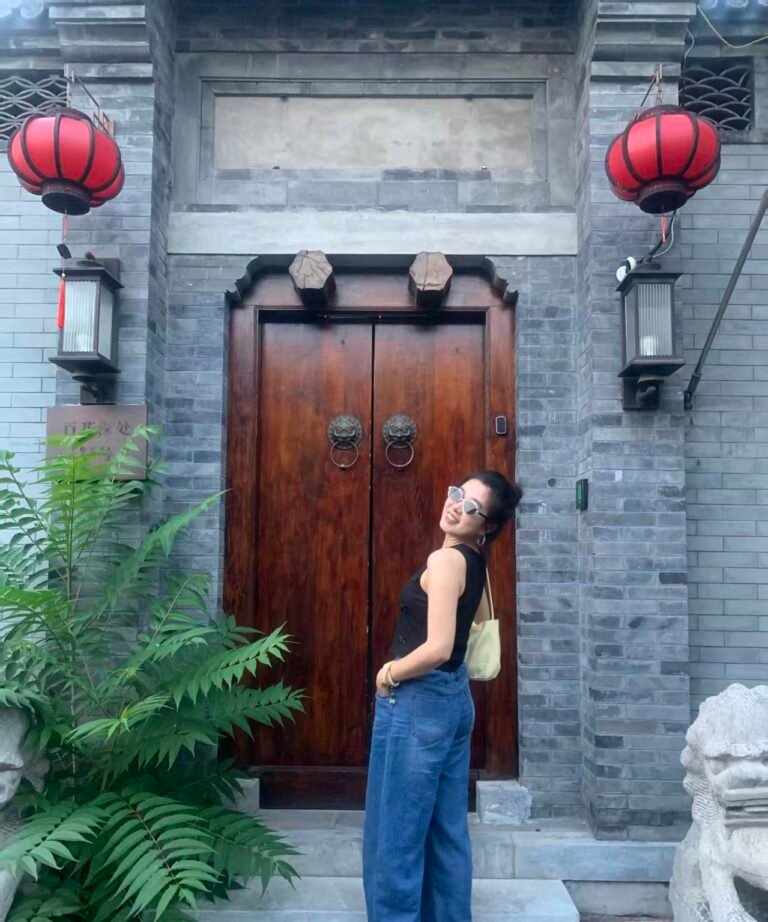
BEIJING-HUTONG
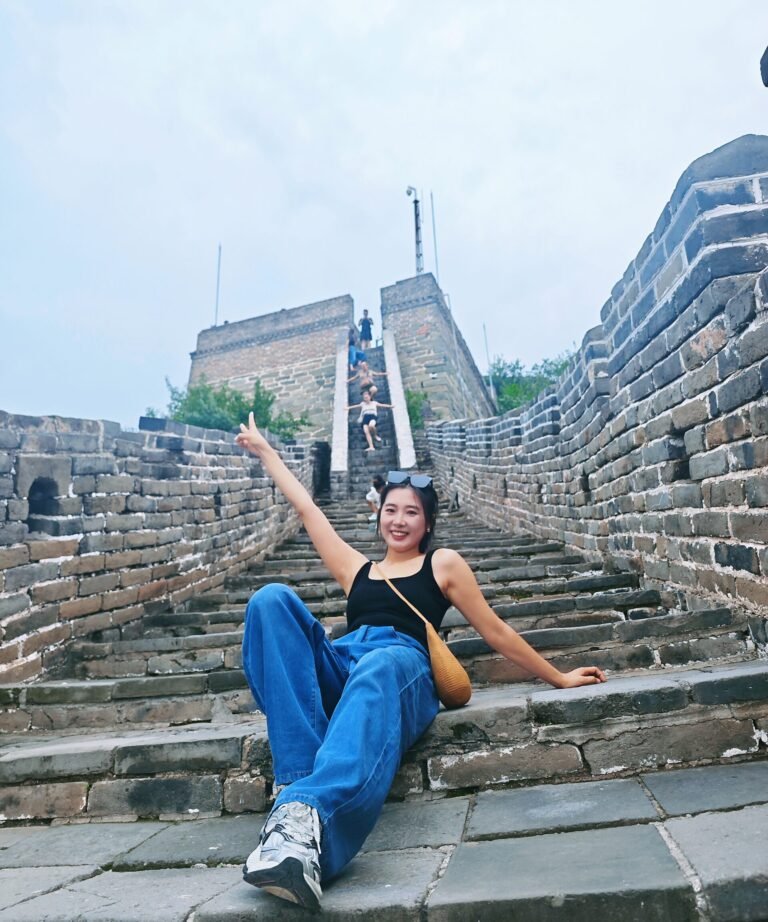
MUTIANYU GREAT WALL
HONGKONG
SHAOLIN TEMPLE
XI'AN
QINGDAO
SUZHOU

© 2026 TripExpectJouney All Rights Reserved
