
Take a Slow Walk Around West Lake
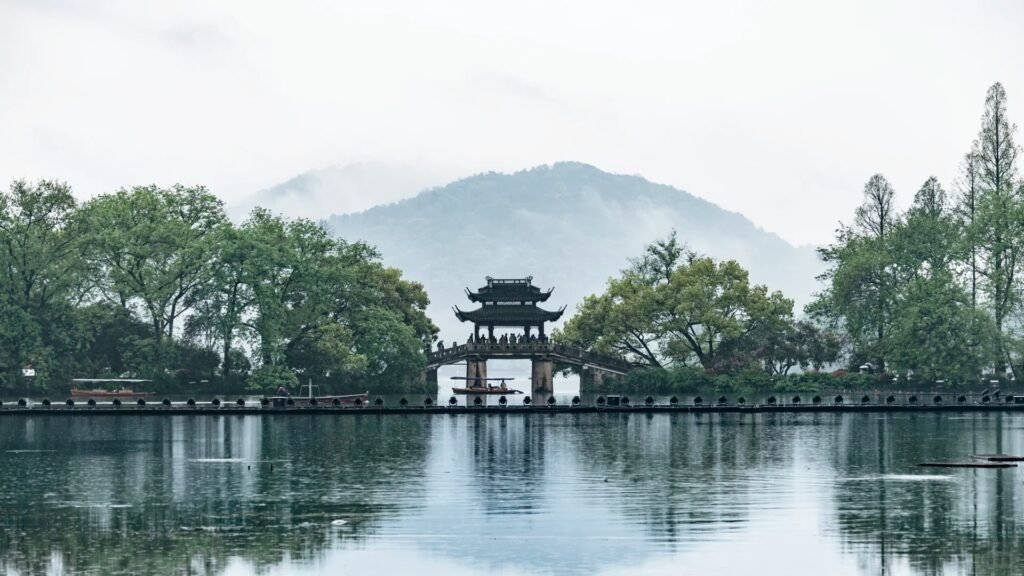
Hangzhou has always felt like a place I could live. The first time I went was right after graduating college, with a close friend — just wandering around, eating, taking it all in. I fell for the place from that trip. The air feels soft and clean, and everyone here, young or old, seems to have great skin — I remember being a little envious. Something about arriving in Hangzhou just makes you want to slow down, to actually feel the place.
This time, a local friend mapped out a walking route for me. Following it left me with even more reasons to miss this city.
Willow Waves Warbling Orioles
This is where locals actually come every day — quiet, scenic, a slow stroll along the water that carries the unhurried rhythm of old Hangzhou.
It was drizzling the day I went. The willow shade grows thicker in summer than in spring, and walking beneath it felt like stepping into a natural green tunnel. The wind rustled the leaves, mixing with cicadas and birdsong.
Further in, a stone bridge appeared, ancient trees and their reflections tangled together in the water — easy to mistake for the depths of some Jiangnan garden. Further ahead, a wide lawn opened up, green as a prairie, with squirrels darting up and down the trees, never a dull moment.

Leifeng Pagoda
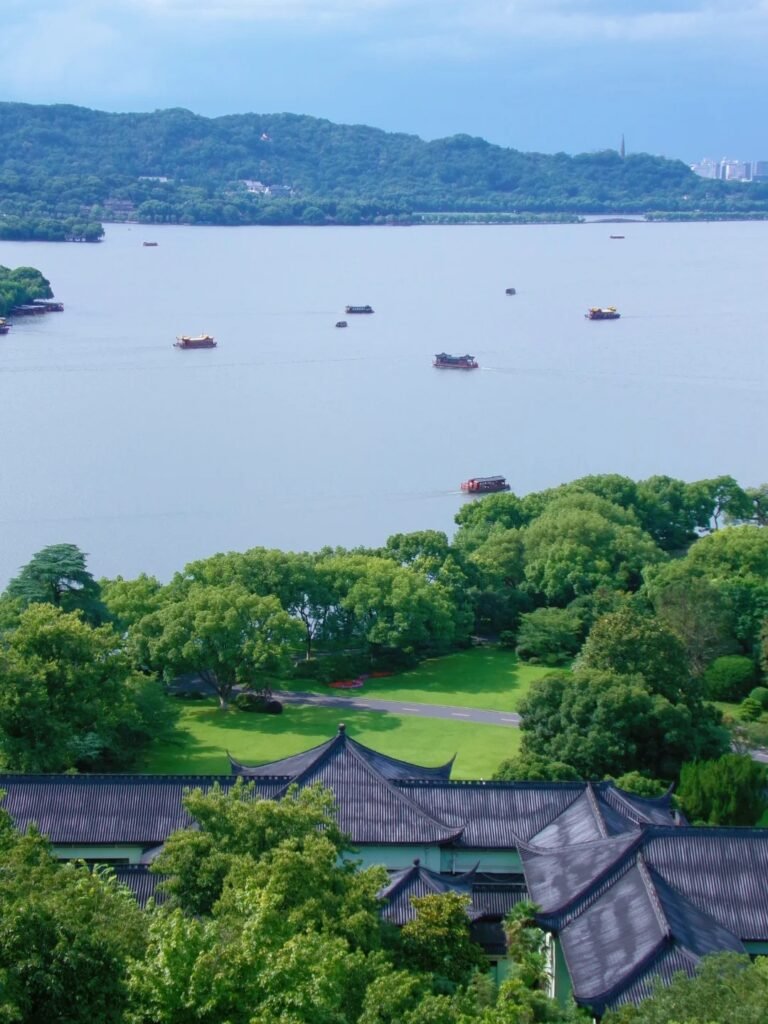
Leifeng Pagoda is one of West Lake’s landmark structures. The current tower was rebuilt in 2002, but the ruins of the original foundation — and the view from the top looking out over the lake — are still worth the climb.
I’ve always preferred natural scenery over crowded photo spots. An elevator takes you straight to the fourth floor; one more flight of stairs gets you to the top.
The fifth level has a golden dome ringed with 2,002 small gilded Buddha niches. From the observation deck, the entire lake and city unfolded in a 360-degree view — Su Causeway and Jingci Temple visible in the distance.

Yang Gong Causeway
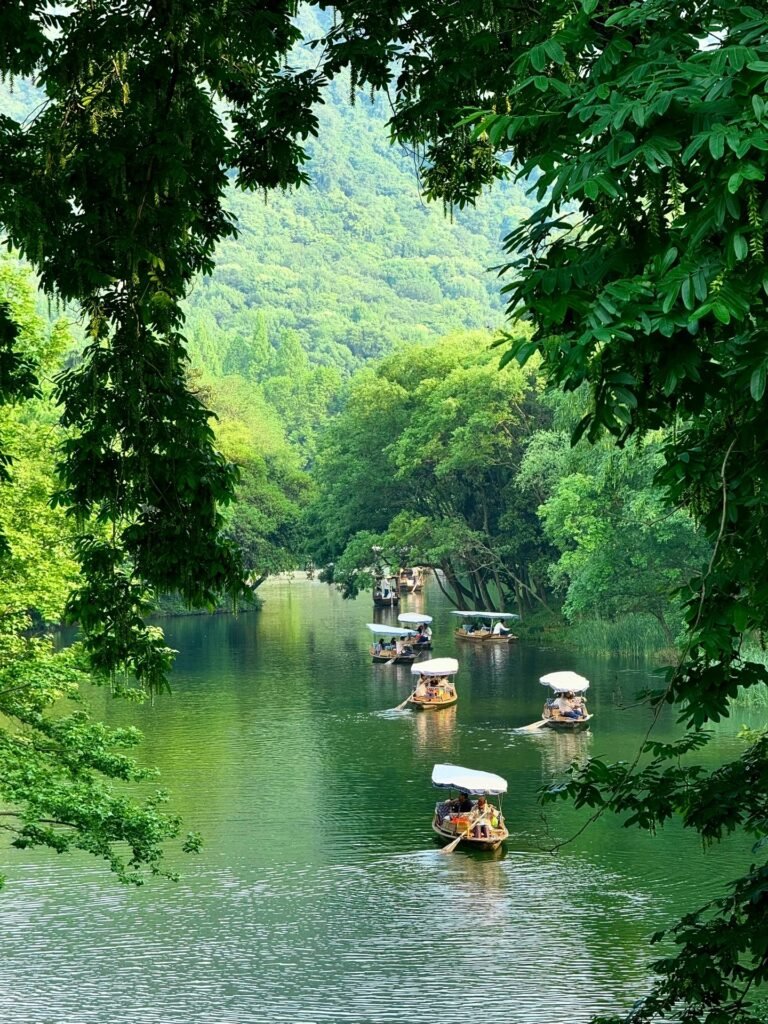
Yang Gong is the only causeway around West Lake where cycling is allowed. Riding along it, the whole path is wrapped in green, almost like stepping into a fairy-tale world. The water opens and narrows in turns here, the shoreline folding unevenly, dense trees shutting out every trace of the city beyond. A hand-rowed boat drifted slowly across the surface; a wild duck occasionally skimmed past, sending ripples outward.
Here, all you need to do is slow down — walk along the water, sit in a pavilion, watch people stroll by in twos and threes, watch boats cross the lake, listen to the cicadas, birdsong, and the murmur of moving water. It’s the kind of place that seems to dissolve exhaustion. Locals walk this route again and again.
Unfortunately I arrived in the afternoon, and the line near Turtle Pond was too long — I didn’t get a boat. If you want to try the hand-rowed boats (1–2 hours), get to Majiawan Dock by 8:30 AM, or the wait gets long. That one’s for next time, if I come early enough.
Prince Bay Park
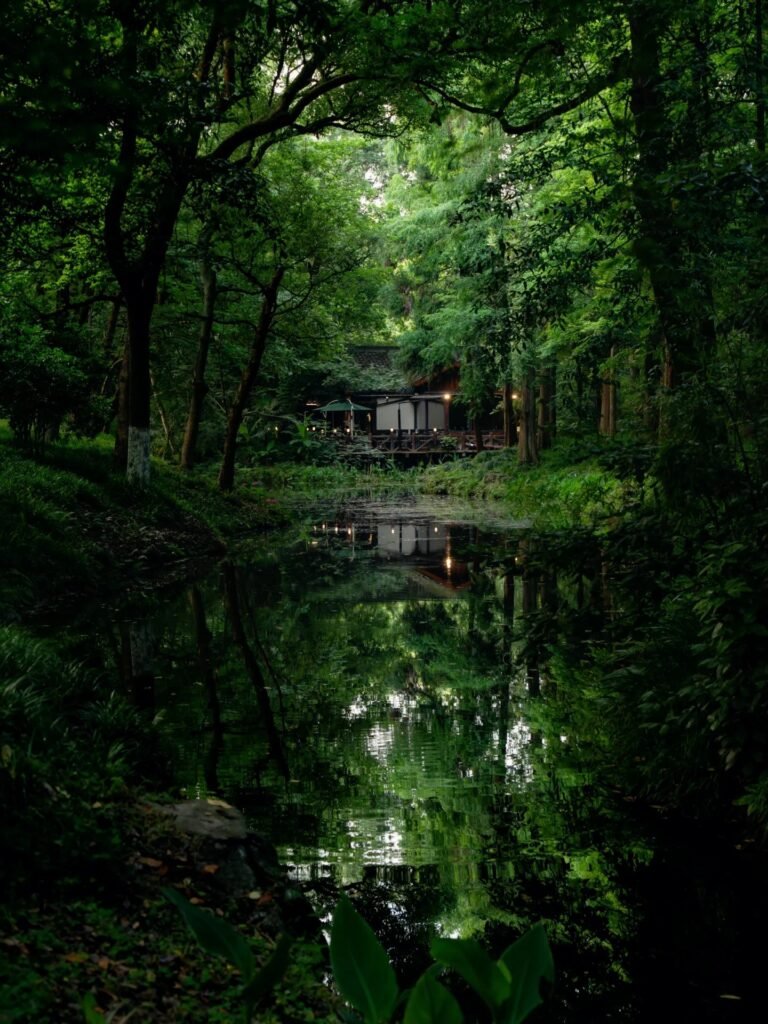
Prince Bay Park is tucked away beside West Lake, nothing like the crowds at Su Causeway or Broken Bridge. The path winds quietly through thick greenery, and walking in feels like stepping into a fairy tale — relaxed, unhurried.
Camphor and dawn redwood trees layer thick enough to block out the summer heat. Following the stream, waves of herbal, green scent drift past with each step. At the pavilion overlooking the water, a wide lawn stretched out on the far shore, benches and visitors scattered across it — the kind of view that looks almost cinematic.
I stood there for a while and watched a security guard helping some visitors with their photos — not just pressing the shutter, but coaching them on how to pose, how to find the angle, even walking them to another spot nearby. Security was just his day job. Photography, clearly, was something he actually loved doing.

Quyuan Fenghe (Lotus Pond)
Most of the lakeshore is fine on foot, but the stretch from Prince Bay Park to Quyuan Fenghe runs about 2.8 km — better to cycle than walk.
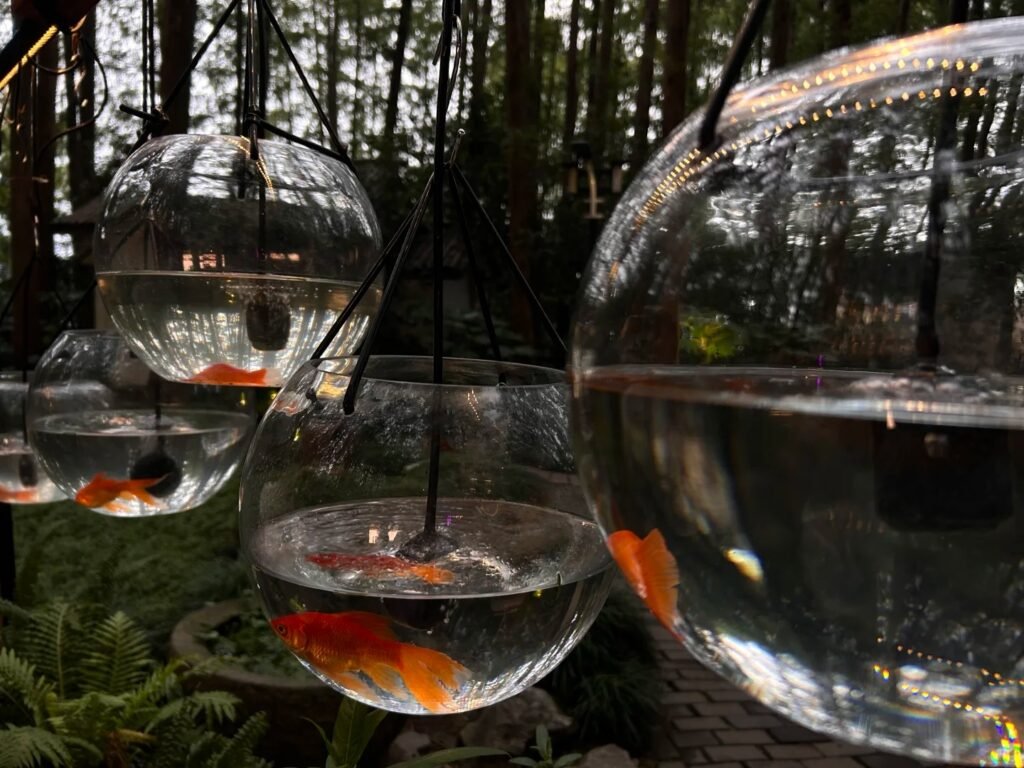
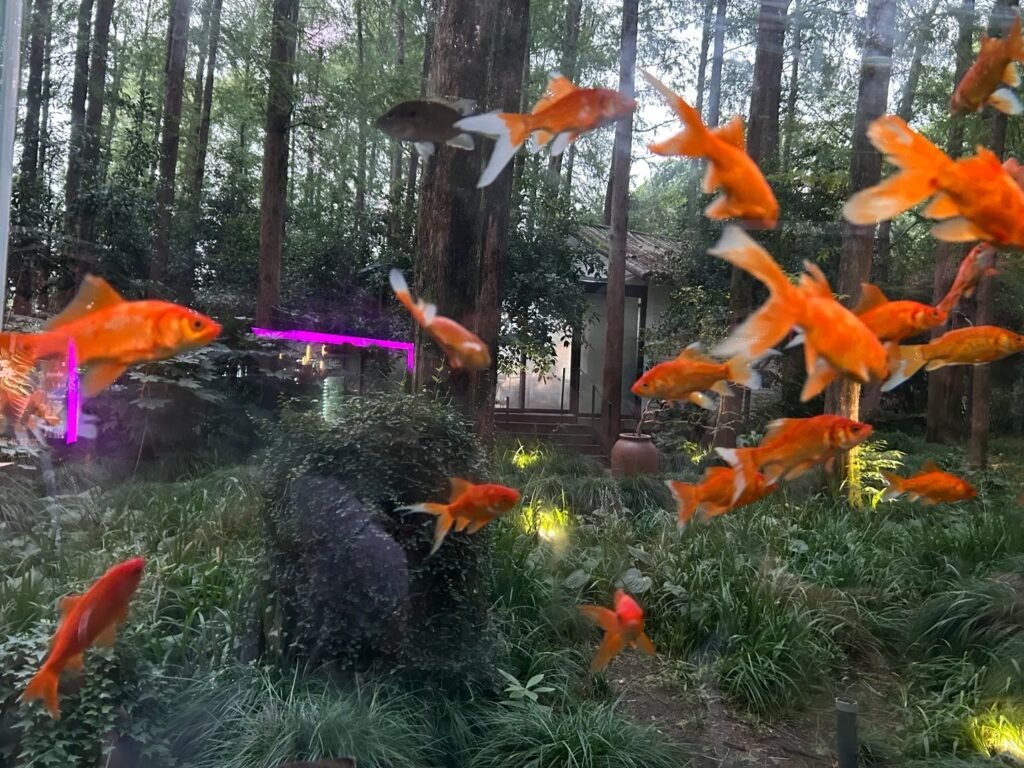
One of the Ten Scenes of West Lake, free to enter, and often overlooked. In the Southern Song dynasty, this used to be an imperial winery, its scent of liquor once mingling with the fragrance of lotus blossoms in summer. The winery is long gone, but the sight of hundreds of lotus varieties covering the pond remains — one of Hangzhou’s signature summer scenes, pink and white blooms framed by pavilions. Nearby, there’s also a suspended fish-tank photo spot worth a glance.
Solitary Hill
Solitary Hill gets its name because it isn’t connected to any other ridge — seen from a distance, it looks like it’s floating alone on the water. At just 38 meters, it’s the lowest of West Lake’s hills, and its scenery was already famous back in the Tang and Song dynasties.
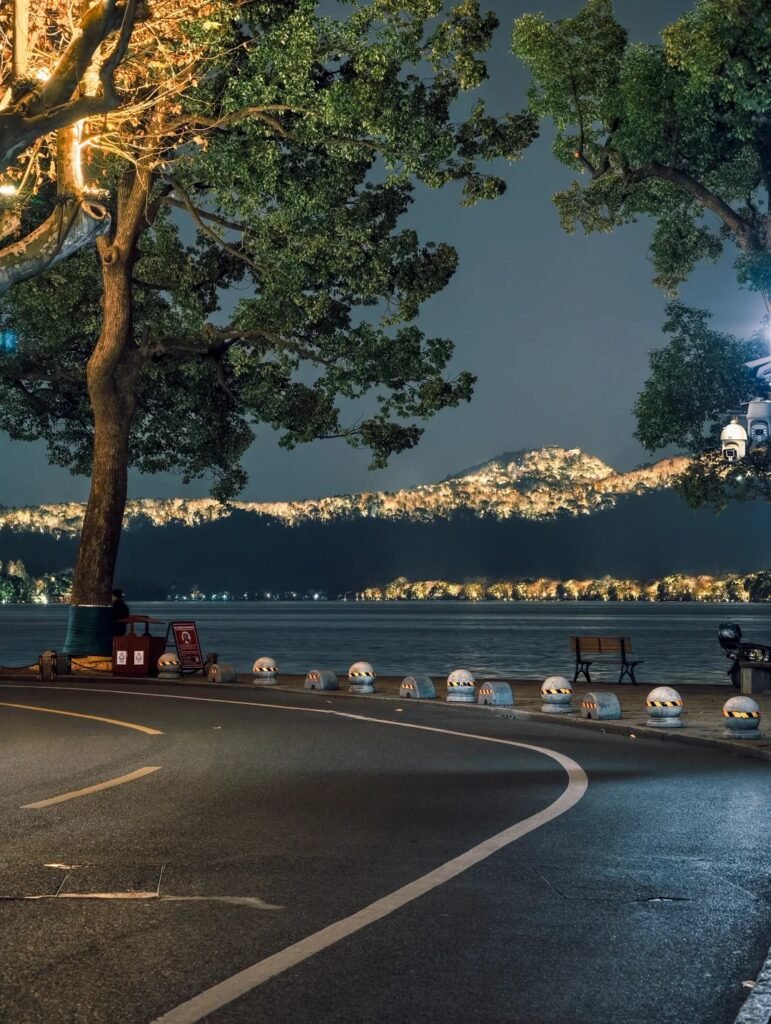
Solitary Hill feels completely different by day and by night. Going in the evening means skipping the daytime crowds — walking slowly, the damp night breeze off the lake settles over you, and everything in you loosens at once. Lights spread out along the water, the old bridge wrapped in warm yellow light, its reflection breaking apart into scattered gold across the rippling surface. Pavilions hide among the dense trees, a long corridor curves gently, streetlamps casting a soft glow. Walking beneath the plane trees, shadows dancing on one side, the open lake and hills on the other — the “most beautiful bend” of West Lake truly earns its name. The view opens wide, distant mountains dotted with faint lights, the lake quiet, an occasional tour boat drifting past, its hazy lantern light gliding slowly across the water. The whole atmosphere just settles into place.
By the time I reached Solitary Hill, it was already dark — a day of walking, stopping for food, resting when I needed to. Where you go from here is up to you.
More Story


Join us
Get the occasional email from TripExpect — things worth knowing before or during your trip.
BEIJING-HUTONG
MUTIANYU GREAT WALL
HONGKONG
SHAOLIN TEMPLE
XI'AN
QINGDAO
SUZHOU
HOME
ABOUT
DESTINATION
TRAVEL GUIDE

Get the occasional email from TripExpect — things worth knowing before or during your trip.
© 2026 TripExpectJouney All Rights Reserved
