
Mutianyu Great Wall at Sunset: A Complete Guide to the Best Time to Visit
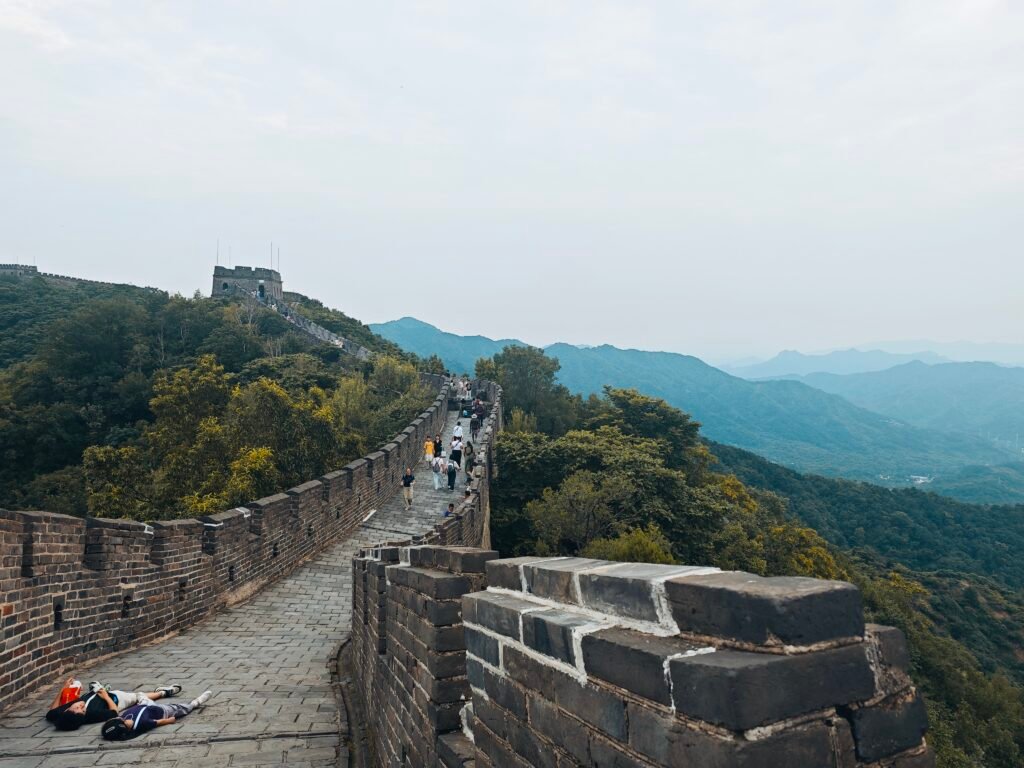
I’ve been to Mutianyu twice. Once during normal daytime hours, once for the summer night tour. It’s the same stretch of wall, but the daytime and nighttime versions of it left me with completely different impressions. By day, Mutianyu is lively and open — you can trace every bend of the mountain ridge stretching into the distance. By night, it’s much quieter. The lights run the length of the wall, and the watchtowers stand out sharply against the dark — a completely different character altogether. This piece covers both visits, along with all the practical details: how to take the cable car up, which sections are best for hiking on foot, how to buy tickets, and how to get there from central Beijing. Whether you’re planning a daytime visit or the night tour, this should have what you need.

Beijing’s two most famous sections of the Great Wall are Mutianyu and Badaling. Mutianyu is the best-preserved stretch of the Ming-dynasty Great Wall and represents the pinnacle of Ming Great Wall construction. In terms of the experience, Mutianyu is more scenic than Badaling, and its biggest advantage is fewer crowds and gentler slopes. Mutianyu also offers beautiful scenery in every season — spring brings blooming mountain flowers, summer brings lush green shade, autumn turns the mountains red with foliage, and winter dresses everything in snow.
I’ve been twice — once to see the sunset and night views at Mutianyu, and once to go hiking. The two experiences were completely different.
The sunset trip was in summer (August to early October), when the night tour season was open, allowing visitors to explore Mutianyu after dark — perfectly avoiding both the sun and the crowds. We arrived around 4:30 in the afternoon and headed straight for the cable car. Going in the evening meant we didn’t have to wait long in line. Each cable car holds six people — don’t be afraid to board, but move quickly, since it doesn’t stop and wait for you. That said, there’s no need to worry — staff are there to help, so it’s not dangerous. As the cable car glided slowly up the mountain, I looked out the window at the sea of lush green trees, and my mood lifted along with the view, filling me with anticipation for climbing the wall. The cable car takes you directly to Tower 14, and from Tower 14 to Tower 20 is the stretch we hiked — also the most beautiful section of all.
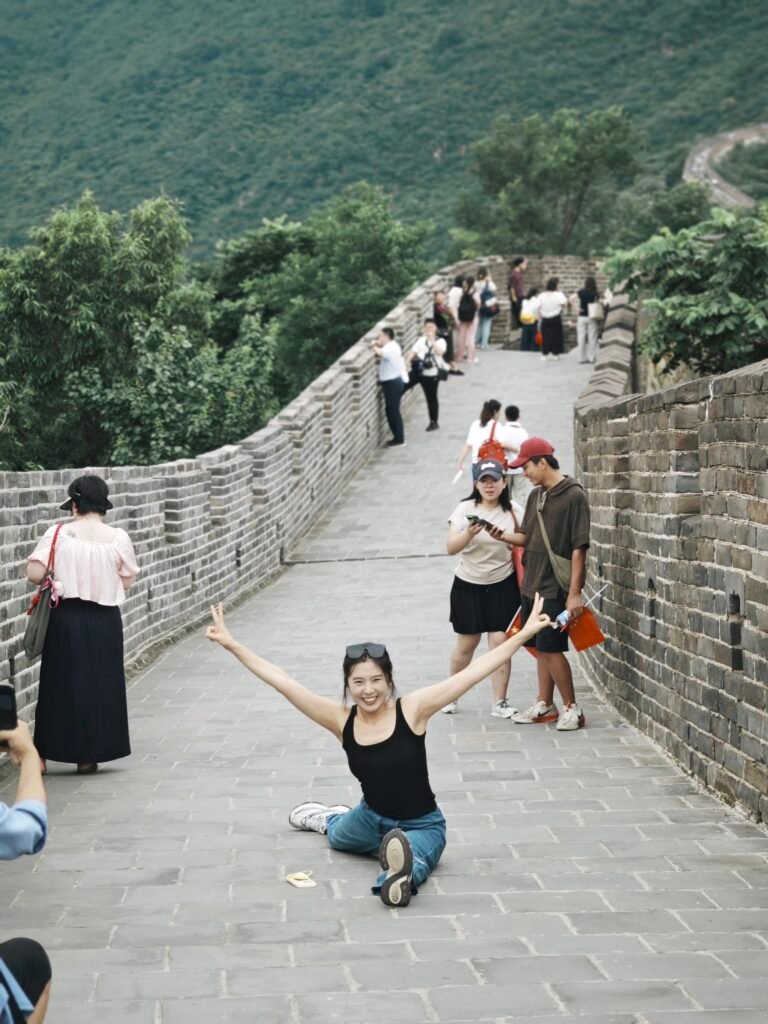
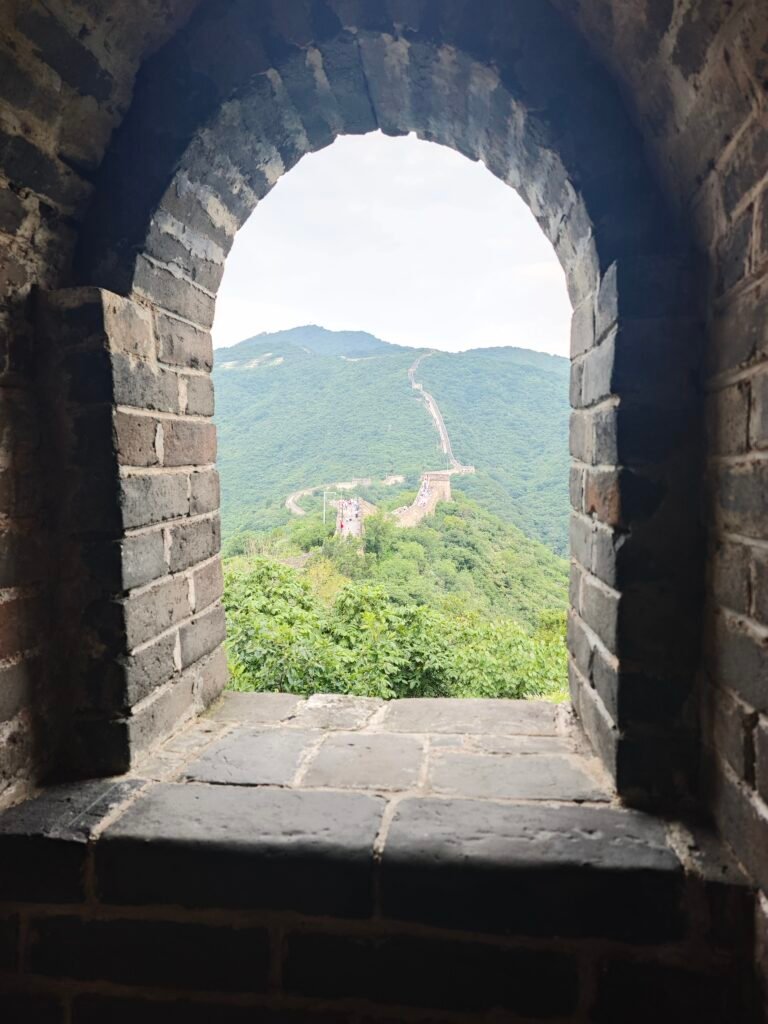
The things you absolutely can’t miss on a night tour:
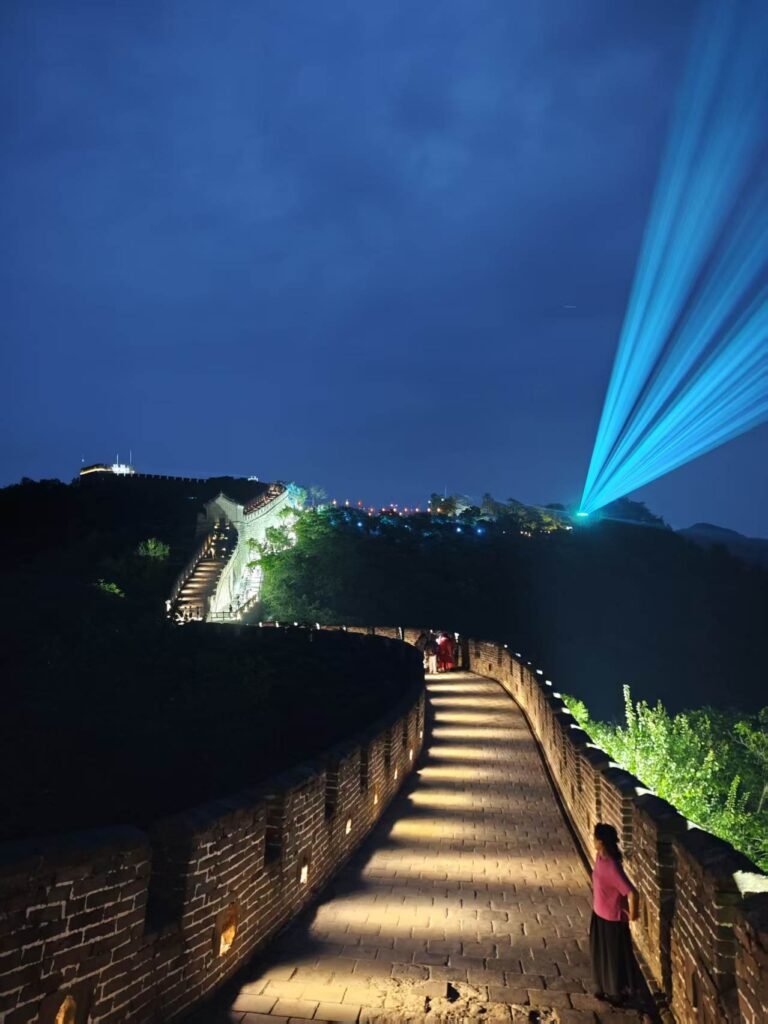
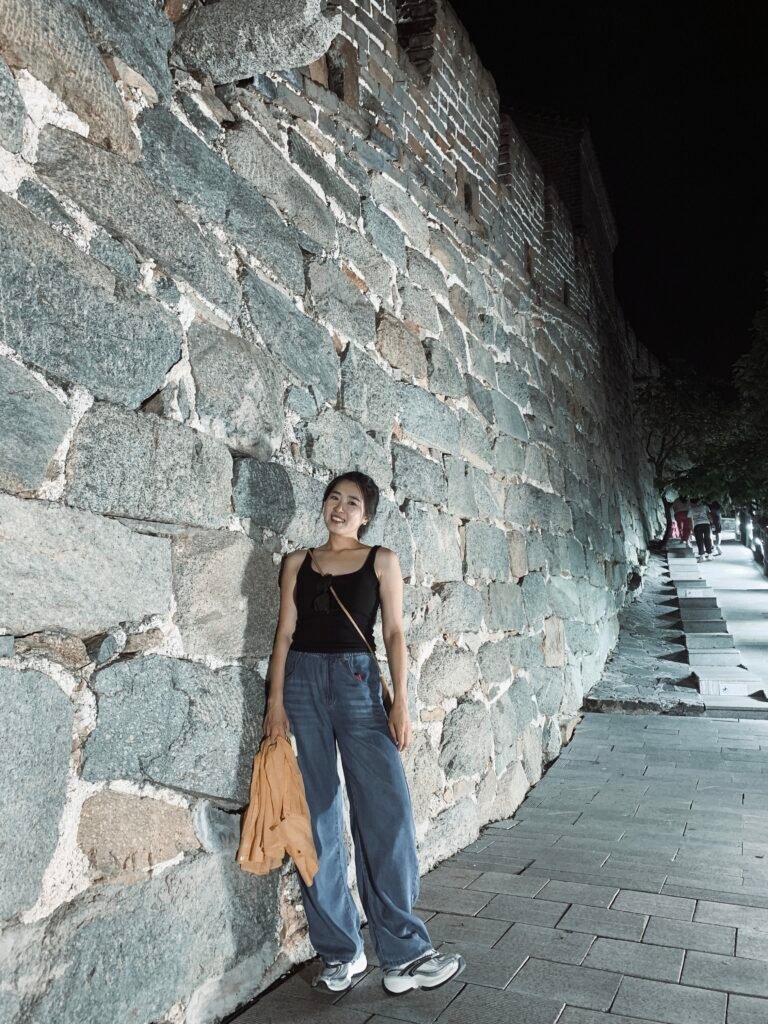
Stunning sunset and lights: Arriving at 17:30 is ideal, timed perfectly with blue hour and the orange sunset. At 19:30, the wall’s lights come on, and the entire structure glows like a dragon winding along the ridgeline — truly breathtaking.
Light and shadow show on the mountainside: At night there’s a laser show and interactive projections. The interactive light wall between Towers 12 and 14 is especially fun — the light shifts as you touch the surface.
Night tour hours are generally 17:30–21:00 (last entry at 20:30), with the lights typically coming on around 19:30.
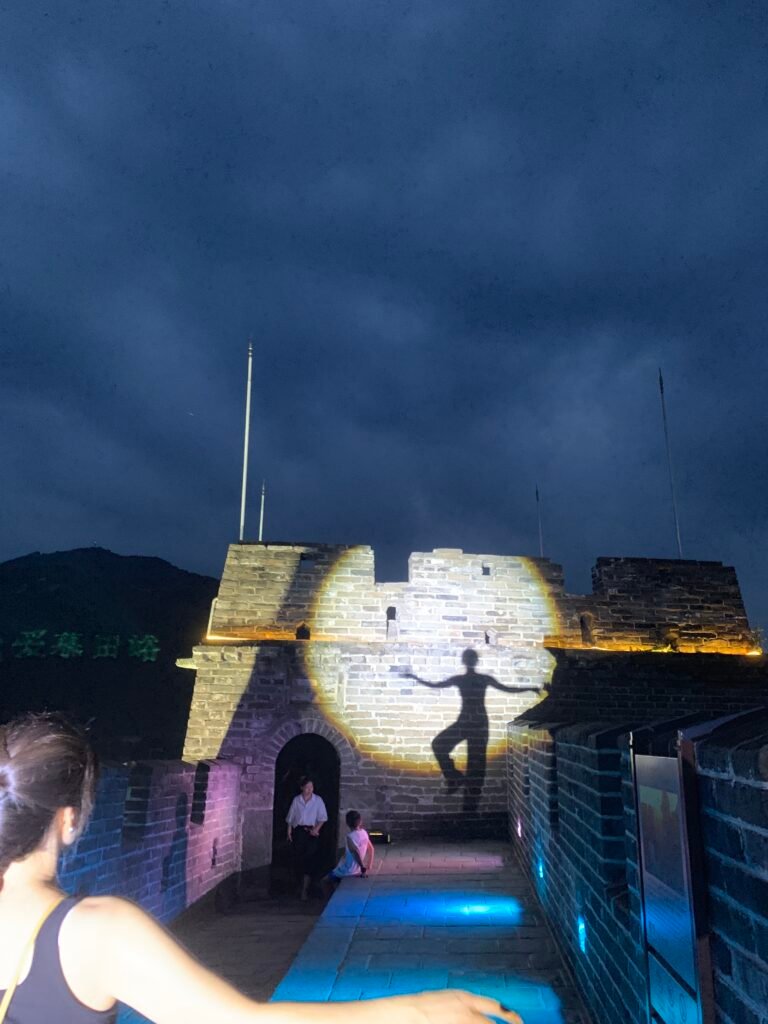
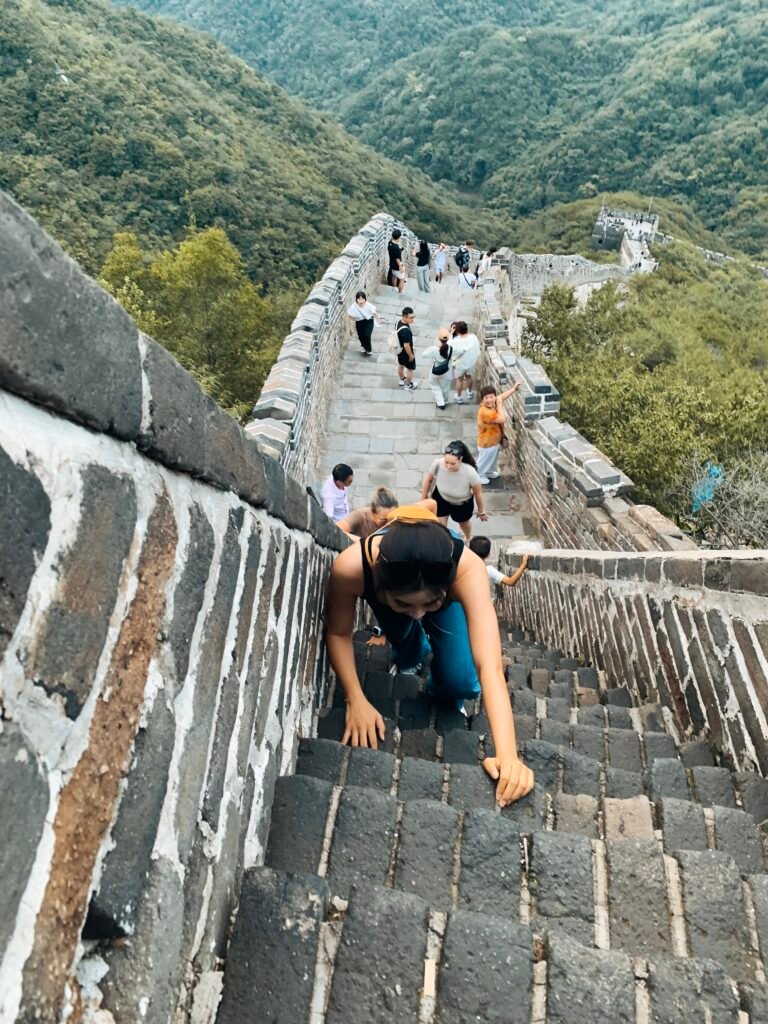
The second time, I went hiking at Mutianyu with my sister and her daughter. We were confident in our stamina going in — turns out we’d overestimated ourselves. I’ve included our hiking route below in case you’d like to try it too. The scenery really is beautiful, but it really is exhausting. By the end, our 11-year-old was ready to throw a tantrum from sheer exhaustion — ha!
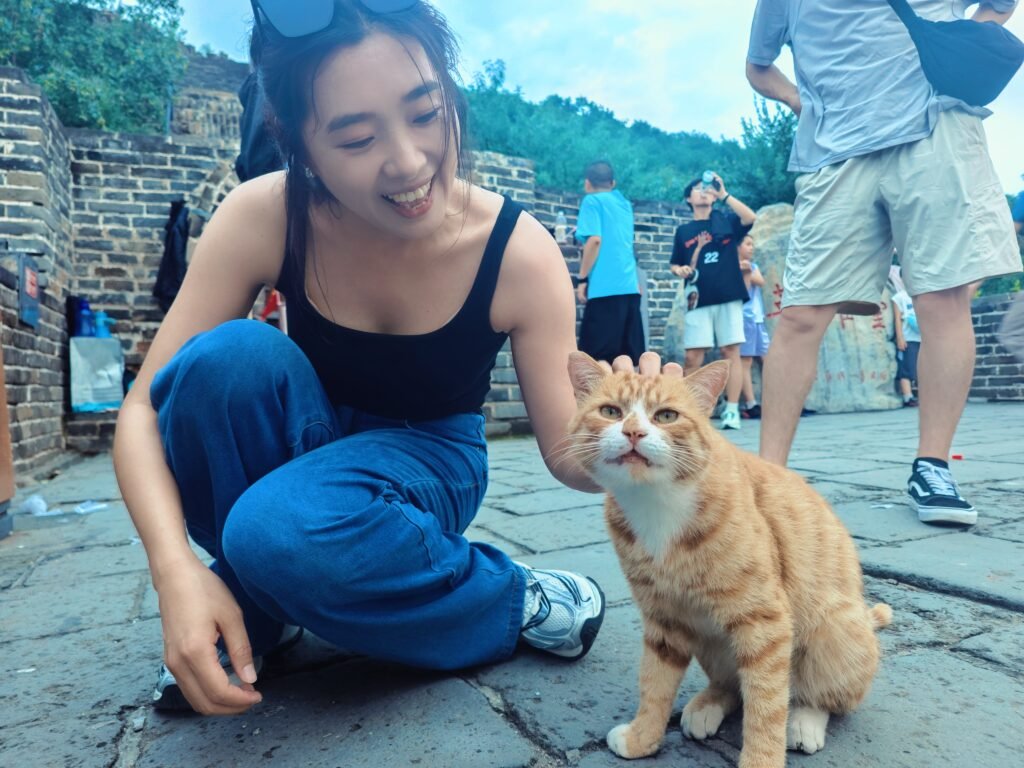
If you’re lucky along the way, you might spot cats lazing in the sun. They’re clearly used to crowds and aren’t at all afraid of people — some are aloof, others surprisingly affectionate.
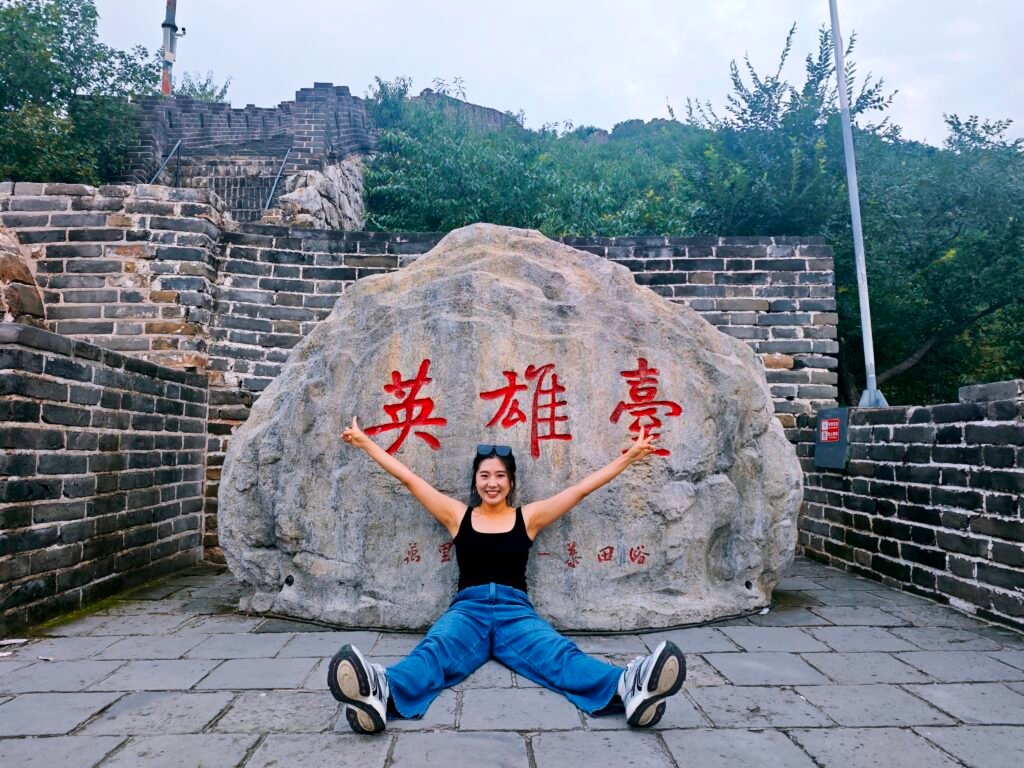
In-depth hiking route: About 4–5 hours. Enter from the South Ticket Gate and hike up the South Trail (all stairs) for about 30–40 minutes to reach Tower 6. From there, continue along the wall to Tower 1 (the Great Corner Tower), then backtrack through Tower 6 and head west, passing Tower 19 (“Hero’s Slope”) and Tower 20. Finally, descend via the North Trail from Tower 10 to the North Ticket Gate. The route never doubles back, so you can hit both the east and west highlights in one trip. (The path is well marked throughout.)
There’s also the option of taking a cable car or chairlift up and down — we didn’t try it. If you prefer something more outdoorsy and aren’t afraid of heights, you can take the chairlift up and the toboggan slide down for a more thrilling experience.
Getting there
By car: Navigate to “Mutianyu Parking Lot.” After parking, take the shuttle bus to the trailhead. (Note: there’s a stretch of uphill walking between the parking lot and the shuttle, and again between the shuttle and the cable car, so save some energy.)
By shuttle bus: We recommend the direct shuttle from the Qianmen Tourist Dispersal Center or the Beijing Tourist Dispersal Center. Buses run on a rolling or fixed schedule, tickets usually include the shuttle bus, and you can buy tickets directly onboard — a convenient, one-stop option that skips the hassle of transfers.
By public transit: Take the 916 Express bus from Dongzhimen to Huairou Beidajie, then transfer to bus H23/H24. The trip takes about 2.5 hours.
Night tour tips
Night tour season: Night tours typically run seasonally (roughly from summer through early October). Check the official Mutianyu Great Wall WeChat account before you go to confirm it’s open that day, so you don’t make the trip for nothing.
Dress warm, bring bug spray: It gets windy and the temperature drops sharply on the mountain at night, so bring a light jacket. Mosquitoes are common in the forested areas, so insect repellent is a must.
Wear non-slip shoes: The steps on the wall are steep, and some sections are quite treacherous. Wear comfortable, non-slip athletic shoes, stay safe, and don’t climb into unopened areas.
Bring your own food: Most restaurants at the base of the mountain close by 6pm, and dining options inside the scenic area are limited. Bring your own snacks and water, or eat at Yisong Tower Restaurant.
Plan your return: The night tour ends at 21:00, and the cable car and shuttle bus stop running shortly after. If you’re taking a taxi or a private car, arrange your return time with the driver in advance — don’t wait until you’re off the wall to try to find a ride.
No toboggan at night: The toboggan slide doesn’t operate in the evening. If you want to try it, you’ll need to visit during the day.
Reservation and ticketing guide
Booking channels: You can book through the official Mutianyu Great Wall WeChat account, the Mutianyu Great Wall tourism website, or third-party platforms like Ctrip and Meituan. The scenic area’s system supports passport-based ticket purchases, and some platforms accept international credit cards like Visa and Mastercard.
Information required: You must register using your original passport. The English name (as romanized) and passport number you enter must exactly match your passport’s information page — double-check for errors, or you won’t be able to pass through the entry gates.
Ticket limits: Each ID (passport) is limited to one ticket per day. Adult tickets are typically 40 RMB.
Entry and visiting notes
Required documents: You must bring your original passport for entry. The scenic area uses “passport scan + facial recognition” for entry — a photo or copy of your passport may not be recognized.
Opening hours: Peak season (March 16–November 15) is 7:30am–6:00pm; off-season (November 16–March 15) is 8:00am–5:30pm. Ticket sales stop one hour before closing, and entry stops half an hour before closing. If you’re not doing the night tour, it’s best to enter before 3pm.
Getting up and down the mountain: Mutianyu is very accessible for elderly visitors and children, and the cable car or chairlift are recommended. The enclosed cable car costs 140 RMB round trip and goes directly to Tower 14 — smooth and comfortable. The open-air chairlift paired with the toboggan slide down is also popular with younger visitors, though those over 60 are not permitted to ride the toboggan.
Transportation and convenience tips
Direct shuttle services: If you’d rather not navigate the complicated transit options yourself, you can book a Mutianyu Great Wall shuttle service like “Basdai” or “Mu Bus.” These typically include round-trip transportation from the city and ticket booking, with English-speaking guides onboard — very convenient for foreign travelers without a Chinese phone number.
Driving or taxi: If driving, navigate directly to “Mutianyu Great Wall P2 Parking Lot” (parking costs about 20 RMB/day). By taxi or private car, the drive takes about 1.5 hours.
Restaurants near the Great Wall and how to find them
Yisonglou Restaurant(翼松楼): Beijing cuisine. Perfect for refueling once you’re starving after coming down from the wall. It’s conveniently located right at the exit where the trail comes down.
Great Wall Home Rooftop Restaurant(长城的家山顶餐厅): A beautifully designed space with a lodging area, a dining area, and a coffee area. From up here, you get a sweeping view of the entire Mutianyu Great Wall.
To find restaurants, you can use the Dianping app — it shows restaurant descriptions, locations, and average cost per person, and you can tap straight through to navigation. (Dianping is basically China’s version of Yelp) or just search the restaurant name directly on Amap (Gaode Maps)
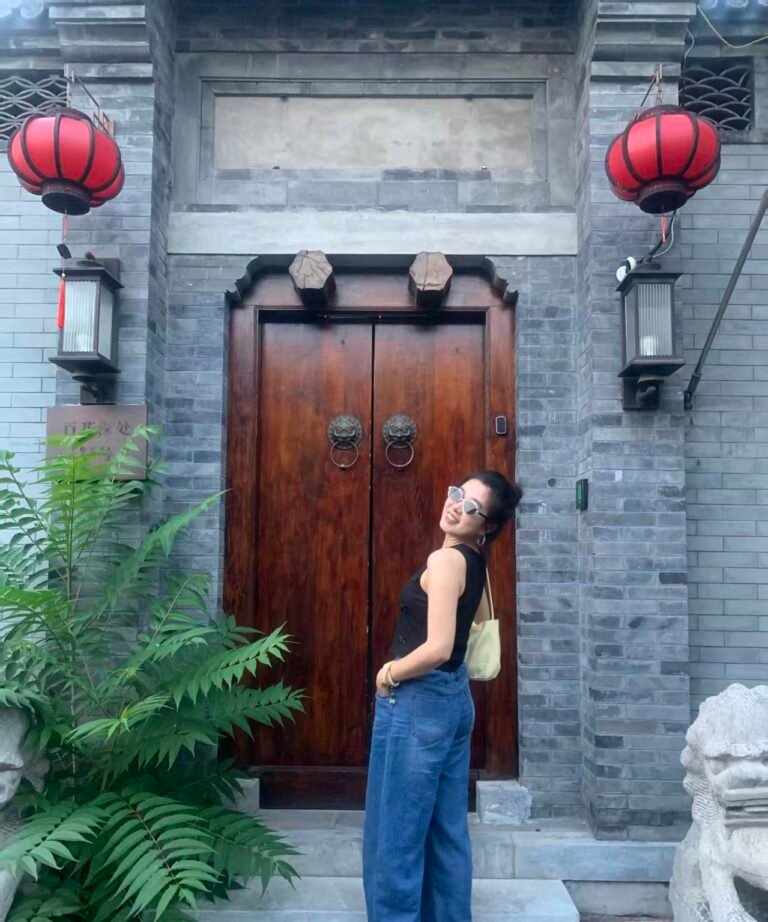
BEIJING-HUTONG
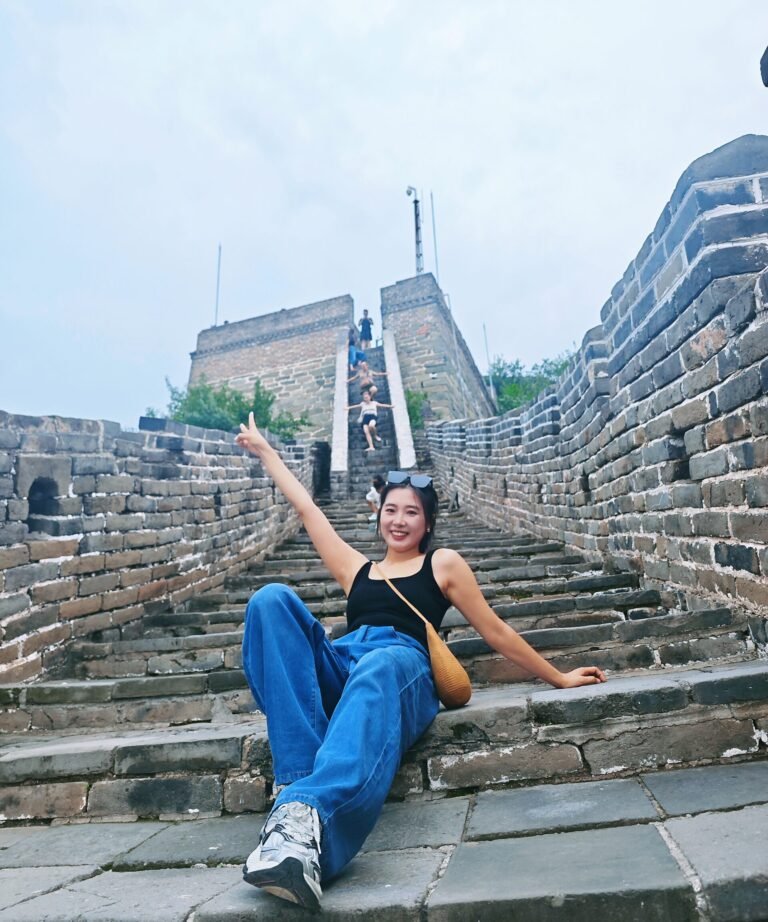
MUTIANYU GREAT WALL
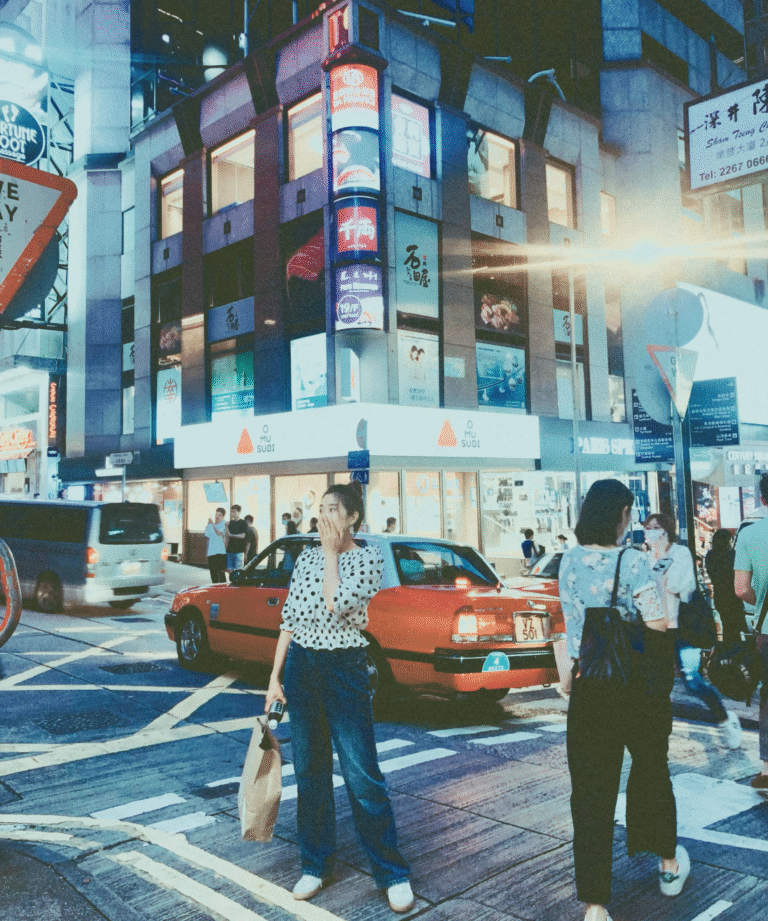
HONGKONG
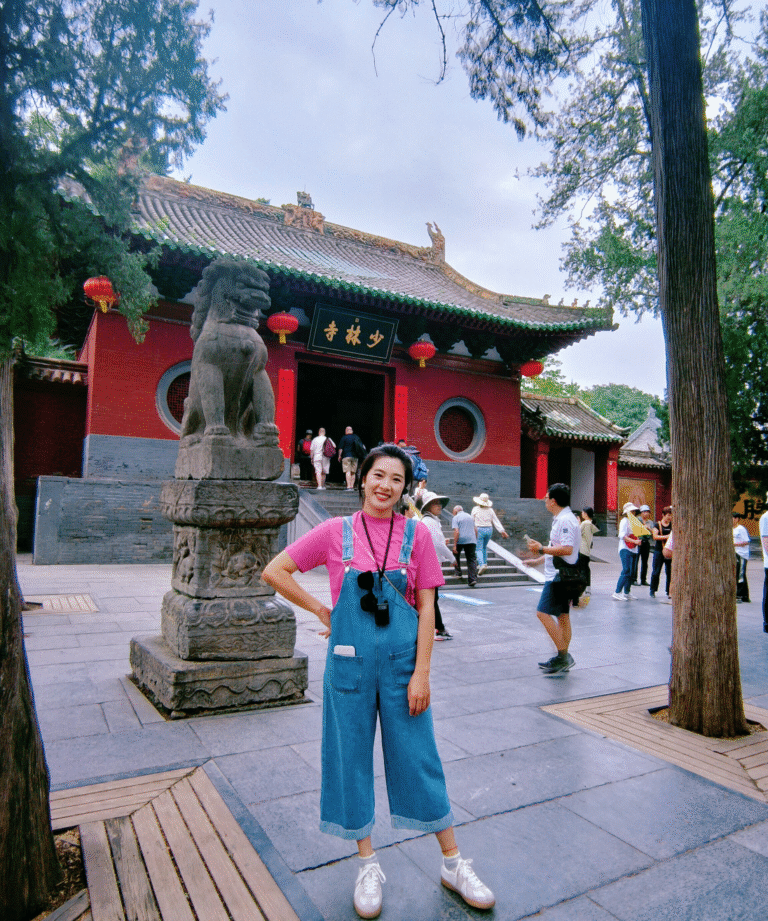
SHAOLIN TEMPLE
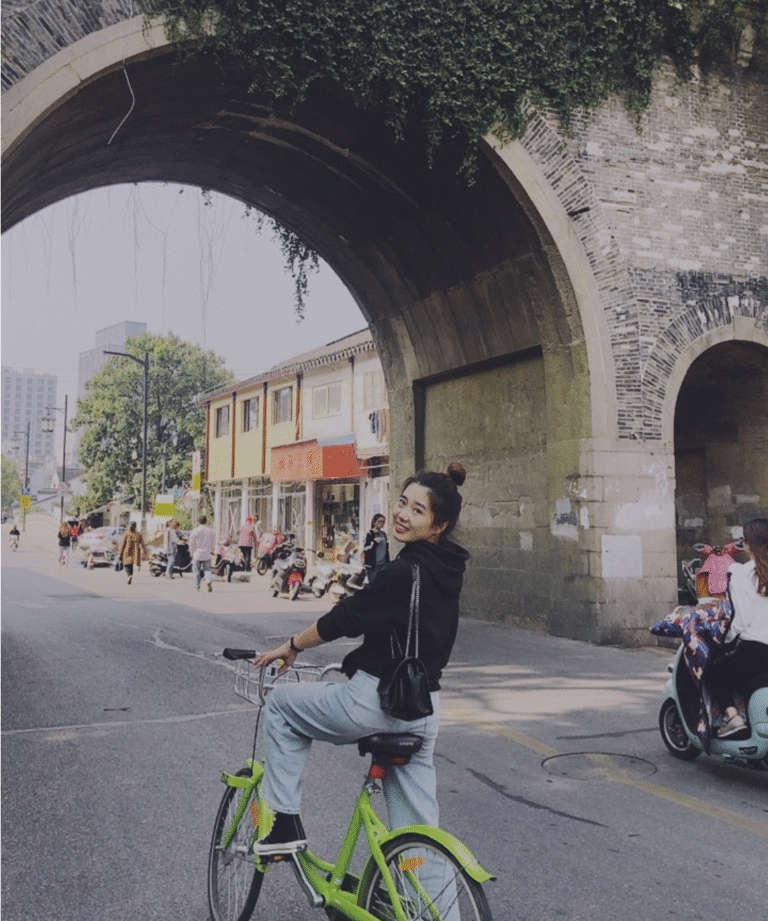
XI'AN

QINGDAO
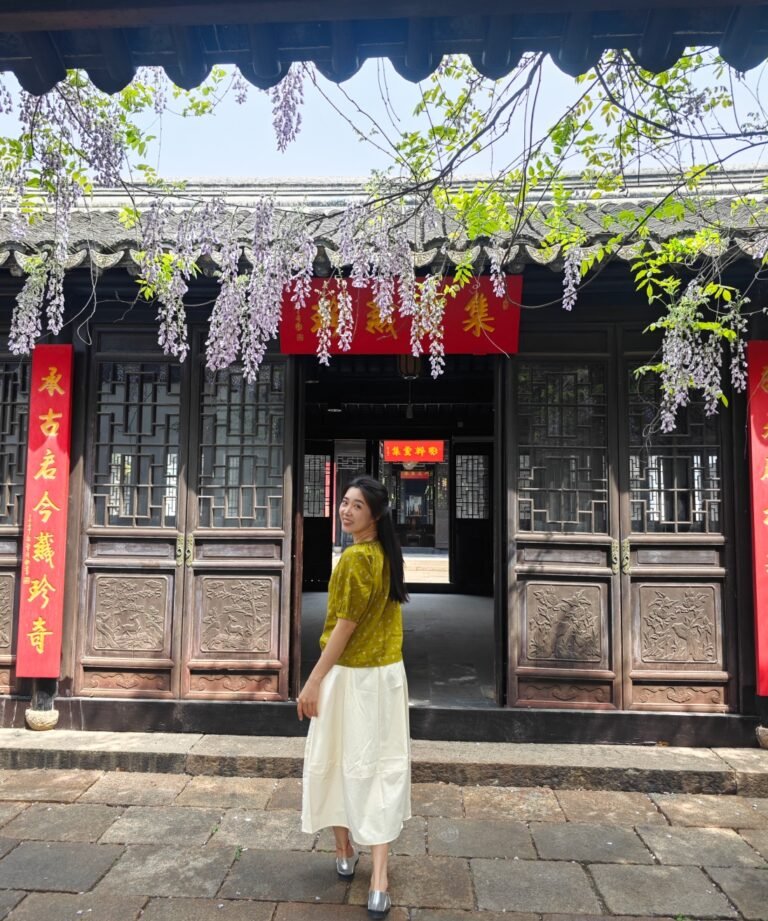
SUZHOU
HOME
ABOUT
DESTINATION
TRAVEL GUIDE

Get the occasional email from TripExpect — things worth knowing before or during your trip.
© 2026 TripExpectJouney All Rights Reserved
